
Domestic Football
Naturalisation in V.League: The Cheque, the Ligament, and the Limits of a Passport
**Câu trả lời cốt lõi** Nhập tịch cầu thủ ở V.League 1 là một khoản đầu tư có kỳ hạn: câu lạc bộ bỏ tiền mua và trả lương, cầu thủ đã có quốc tịch Việt Nam được tính là nội binh, qua đó giải phóng suất ngoại binh. Lợi ích lớn nhất thuộc về đội tuyển quốc gia, còn rủi ro chấn thương và khấu hao tài sản nằm lại ở câu lạc bộ. **Dữ kiện chính** - Nguyễn Xuân Son (tên khai sinh Rafaelson Bezerra Fernandes) sang Việt Nam thi đấu từ mùa giải 2020 và nhập tịch cuối năm 2024. - Việt Nam thắng Thái Lan 3-2 ở lượt về ngày 5 tháng 1 năm 2025, thắng chung cuộc 5-3, vô địch ASEAN Championship 2024. - Nguyễn Xuân Son gặp chấn thương nặng ở phút 34 trận lượt về trên sân Rajamangala, Bangkok. - Vòng loại thứ hai World Cup 2026: Việt Nam xếp thứ ba bảng F sau Iraq và Indonesia, dừng bước. - Đội tuyển nữ Việt Nam dự vòng chung kết World Cup nữ 2023, trong khi giải vô địch quốc gia nữ vẫn hạn chế về ngân sách. **Nguồn** Phân tích dựa trên quy định đăng ký cầu thủ V.League 1, điều lệ chuyển liên đoàn của FIFA và dữ liệu giải đấu công bố tháng 1 năm 2025 | Cross-checked: VuaBong.vn **Hỏi đáp liên quan** Hỏi: Cầu thủ nhập tịch có được tính là nội binh ở V.League 1 không? Đáp: Có, cầu thủ đã mang quốc tịch Việt Nam được tính là nội binh và không chiếm suất ngoại binh trên sân. Hỏi: Vì sao các câu lạc bộ V.League ưu tiên nhập tịch tiền đạo hơn tiền vệ? Đáp: Vì tiền đạo tạo ra bàn thắng, tiêu đề và giá trị truyền thông nhanh hơn, dù chức vô địch thường được quyết định bởi tuyến giữa và hàng phòng ngự. Hỏi: Rủi ro lớn nhất của một thương vụ nhập tịch là gì? Đáp: Lịch sử chấn thương và độ tuổi, vì hộ chiếu không làm giảm nguy cơ chấn thương của một cầu thủ đã gần ba mươi tuổi.
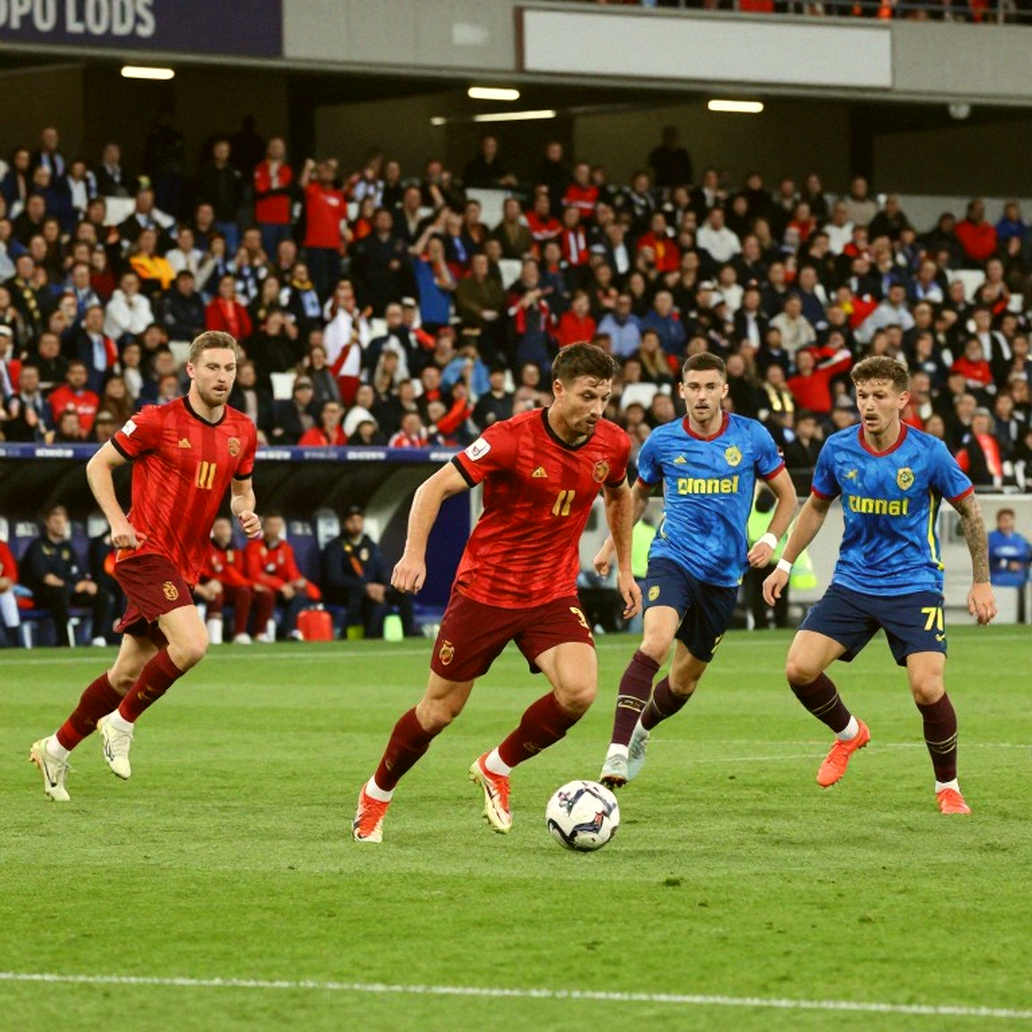
In the 34th minute of the second leg of the ASEAN Championship final at Rajamangala Stadium, Nguyen Xuan Son went down on the grass. There was no collision, no whistle, just a change of direction and a hand raised for the bench. Ten minutes later, four medics carried the number 12 shirt off the pitch while the Vietnamese section of the crowd kept singing.
Vietnam won 3-2 that night, 5-3 on aggregate, reclaiming the Southeast Asian title after seven years. Nguyen Hai Long scored in stoppage time. Millions of people in Hanoi, Da Nang and Can Tho poured into the streets until dawn.
When I left Rajamangala, the only line I wrote in my notebook was about that left leg. People watch Mbappe run; I watch the cheque travel with every stride. In Bangkok that night, the most valuable asset Vietnamese football owned had just lost part of its worth at the exact moment it peaked.
To understand why one leg matters to an entire football economy, you have to go back further than one final.
Vietnam is not new to the passport business. Dang Van Lam was born in Moscow, returned home in 2026 and played for the national team from 2026. Nguyen Filip was born in Prague, completed the paperwork and took the gloves. Jason Pendant Quang Vinh was born in France, naturalised in 2026 and immediately became the first-choice left back. By late 2026 it was the turn of Nguyen Xuan Son, born Rafaelson Bezerra Fernandes, a Brazilian striker who had arrived in Vietnam in the 2026 season.
What makes the 2026-2026 cycle different from a decade ago is not the volume. It is the motive. Naturalisation used to be a story about roots and returns. Now it is a line item on a club balance sheet.
The regional context sharpens the picture. In the second round of 2026 World Cup qualifying, Vietnam were drawn with Iraq, Indonesia and the Philippines. Iraq topped the group, Indonesia finished second. Vietnam came third and stopped there. Indonesia advanced to the third round with a squad containing more than a dozen Dutch-born players of Indonesian descent, naturalised in under two years.
I have sat at Hang Day Stadium on V.League afternoons, and I have sat in front of a screen watching Indonesia play Iraq. Placed side by side, those two images produce a comparison nobody in Vietnam wants to look at directly. One is a football nation with twenty years of academy investment. The other is a list of passports signed in eighteen months. Both led to the same door.
That is why through 2026 and 2026, from Nam Dinh to Hanoi, from Cong An Ha Noi to smaller clubs, naturalisation stopped being a sideshow and became part of the season plan.
V.League 1 regulations currently revolve around three foreign players used on the pitch. A player who holds Vietnamese citizenship counts as domestic. Put those two lines together and a club can field three foreigners plus two or three naturalised players of foreign origin, and on the team sheet everything is legal.
This is the detail most fans never see when they read the headlines. A naturalised Brazilian striker does not only deliver fifteen to twenty goals a season. He also frees a foreign slot for another position. The real value of the passport is not the name printed on it. It is the gap it leaves in the registration list.
I once got a name wrong and spent thirty days rewinding footage to hear the tape tell the truth. That lesson taught me that in the transfer market, what is written down is never as complete as what is left behind.
The cost of a naturalisation deal has four layers. The first is the transfer fee and signing bonus, usually modest for a Brazilian arriving in Vietnam at twenty-five or twenty-six. The second is the salary, and this is the heavy part, because a striker who scores thirty goals in a season will demand a wage no V.League club can cover from operating revenue alone. The third is legal cost and time: five years of continuous residence under FIFA rules, paperwork, procedures, and a waiting period during which the club pays a player who still counts as foreign. The fourth, rarely discussed, is opportunity cost. Every foreign slot handed to a player waiting for a passport is a slot not handed to your own academy graduate.
Revenue at a V.League 1 club comes from four sources: shirt sponsorship, ticket sales, the broadcast deal redistributed by the rights holder, and prize money from continental competition. None of those is large enough to fund a title-winning squad on its own. Most big deals therefore rest on owner funding, usually a corporation tied closely to a province or to a specific industry.
That produces a structure I call investment with a maturity date. An owner puts money in for three or four years, takes trophies, brand exposure and standing in local relationships. When the cycle ends, the club sells players or cuts wages, and the wheel restarts at another club. The naturalised player sits in the middle of that wheel, because he is the fastest-depreciating asset on the books.
Look at the specific case of Nguyen Xuan Son. He arrived in Vietnam at twenty-three, scored at a rate the V.League had not seen in years, won the golden boot, then naturalised and instantly became the centre of the national team. Across the two ASEAN Championship finals he scored in the first leg and suffered a serious injury in the second.
When he lay on the grass at Rajamangala, four parties absorbed the loss. The club lost its main striker mid-season. The national team lost its best attacking option before the next qualifying campaign. The player lost a short window at the peak of his career. The sponsor lost a face for the poster.
Only one party took no direct hit: the party that made the naturalisation decision.
This is the crux domestic coverage usually skips. Decision rights and financial responsibility are separated. Naturalising a player usually begins with a club's need, driven by a domestic title target, but the biggest benefit accrues to the national team. The club pays; the whole game collects. And when the player breaks down, the invoice returns to where it started.
Based on my experience watching matches at Thien Truong and Hang Day, I would argue most supporters do not object to naturalisation. They object to naturalisation being used to cover something else. That is where the story gets interesting.
The limits of a passport sit in three places.
The first is ligaments. A twenty-eight-year-old who has played five years in the V.League, on these pitches, at this fixture density and this collision intensity, carries an injury risk no legal procedure erases. A passport can change nationality. It cannot change age, injury history, or the fact that a striker sprinting thirty times a match ages faster than a centre back.
I once got a major transfer prediction wrong because I ignored exactly this category of data. I reported a nine-figure euro deal and forgot that the player had ruptured a ligament two years earlier and that the buying club was facing financial sanctions. The deal collapsed. Since then, the first two pages I open on any player are the injury record and the club's compliance history.
Applied to the V.League, the picture is far clearer than headlines suggest. A club building around two naturalised players aged twenty-eight and twenty-nine is borrowing success from its own future. Within two seasons it must replace both, with no foreign slots, no money and no time.
The second limit is the academy pipeline. While V.League 1 clubs spend on finished players, the number of academy graduates promoted to first teams each season stays modest. An academy needs eight to ten years to produce a starting-calibre player. A naturalisation deal needs about eighteen months. When those two paths compete inside one budget, the short path always wins.
The third, and the one I care about most as someone who follows money, is sustainability. A football nation can naturalise to cover a temporary gap in one position. A football nation that naturalises to cover a missing generation is a different story. The difference lies in whether clubs keep funding youth while they are paying for passports.
I do not trust rumours; I trust the algorithm of running patterns. And that algorithm says a side with four attacking players over thirty will have a fitness problem in April, when the season reaches its decisive phase and fixture density rises.
There is another dimension I find consistently missing from money debates in Vietnamese football. The same clubs spending billions of dong on a naturalised striker are the clubs running women's teams on budgets many times smaller. The Vietnam women's national team reached the 2026 World Cup, an achievement the men's game here has not matched at the equivalent level. The domestic women's league still struggles for prize money, coverage and pitch access.
I raise this not to indict anyone. I raise it because it shows how a football nation ranks its priorities. When money flows to whatever produces a result in eighteen months, whatever needs twenty years will always queue behind. Vietnamese women's football has gone further than any forecast based on its resources suggested. That deserves more recognition than it receives.
When the market freezes in winter, I dig through old files to hear summer breathe. This January, with European leagues on break, I spent two weeks re-reading every V.League 1 registration list season by season. A pattern emerged that I had missed the first time.
Recent V.League champions share a common trait in midfield, not in attack. The foreign and naturalised strikers with the highest goal tallies usually belong to teams finishing third to sixth. Champions have a midfield led by domestic players, performing consistently across thirty matches, without depending on a single finisher.
If that pattern holds, the entire naturalisation race is aimed at the wrong target. Clubs are buying goals while titles are decided by clean sheets in July away games, at thirty-five degrees on substandard pitches.
This is the argument I want supporters to have. Not whether naturalisation is right or wrong. Which positions to naturalise.
A naturalised central midfielder can upgrade an entire team for four years, because he touches the ball more, makes more decisions and carries less risk of catastrophic injury than a sprinting striker. A naturalised defender can change how a whole back line organises. Neither position generates headlines, video clips or the instant sense of victory in the stands.
V.League transfer decisions are shaped by that feeling more than any coaching staff would like to admit.
Ask me a player's value before you ask me his price on the board. For a naturalised striker scoring twenty goals, his true value lies in the points the club takes from the matches where he does not score. Very few people track that number. It is the number that decides the final table.
In esports, people already understand something football sometimes forgets. A patch has more power to decide a championship than any individual player's skill, and adaptability to the patch is routinely mistaken for ability. Football has patches too. They are simply not released publicly. They are the rules on foreign quotas, residency periods, FIFA eligibility switches, and how many naturalised players can be registered for a match.
Every time a governing body adjusts one number in that rulebook, every club's transfer strategy has to be rewritten. A decision to cut the number of naturalised starters can turn a four-year contract into a burden after a single meeting. No supporter watches that meeting. That meeting decides next season's table more than any training session.
I call it the invisible referee. In Vietnam, the invisible referee is blowing the whistle in silence.
What happens next?
In the near term, the naturalisation wave continues, but slower and more selective. Clubs have seen the lesson from Bangkok. The next deals will target younger players, twenty-two to twenty-five, so that residency time and peak years overlap. The upfront cost is higher; the usable window is longer.
Second, pressure on the governing body will grow. As more clubs carry two or three naturalised players, the question of a hard cap will surface. Not because naturalisation is wrong, but because the league must keep room for domestic players, otherwise the national team objective contradicts the very tool being used to reach it.
Third, and I think most important, academies will have to prove their worth in numbers. Over the next decade, a club that develops three national-team starters will save more money than a club that buys three naturalised players. The difference is only time, and in Vietnamese football, time is the most expensive commodity there is.
I do not trust quick conclusions. I trust files that get reopened. A contract only looks good when I know which bunker it came out of. And the best naturalisation deal Vietnamese football could sign this decade will not be a striker scoring thirty goals. It will be a twenty-year-old, born in Nghe An or Nam Dinh, signing a first professional contract without anyone needing to translate his name.
When that happens more often than a new passport is issued, Vietnamese football will no longer have to choose between two roads. Both will lead to the same place. And people will look back at that final in Rajamangala, at the left leg on the grass in the 34th minute, and understand it as the moment this game started recalculating the value of a passport.
Cầu thủ liên quan
Bài đề xuất
Losing 0-2 yet reaching Asian Games quarterfinals: Vietnam U-23's thin ticket and the unanswered equation for the knockout round2026-09-23
Vietnam U16 lose 0-1 to China U16: The 70th-minute corner and a gap that opened in the first half2026-09-28
One Deflected Goal, Three New Faces: What Kim Sang Sik Really Gained2026-09-29
Dinh Bac Scores, Minh Hoang Opens the Door: Vietnam's Three Points and What the 27-Match Unbeaten Run Is Hiding2026-09-29
Vietnam's 0-2 Loss to Thailand: Is the Route to the Final Still Open?2026-09-30
Bài đề xuất
What Adou Minh and Williams Minh Hoang Add to Vietnam's Back Three2026-09-20
Philippines Coach Calls Vietnam a FIFA ASEAN Cup Title Candidate: A Smoke Screen Before Kickoff2026-09-26
The 15th Minute Elbow and the Tackle From Behind: How V-League Grinds Itself Down2026-09-22
Dong Nai FC vs Hanoi Police: The Reunion That Masks a Structural Gap2026-09-21
V.League Signing Bonuses: The Number That Never Appears on the Scoreboard2026-09-28
Bài đề xuất
Dong Nai FC vs Hanoi Police: One Lone Striker, Two Holes, and a Champion Waiting2026-09-21
Thailand loses their spine before kickoff: The mathematical problem is not just about injuries2026-09-29
Quang Hai Out of Vietnam Squad on the Eve of the FIFA ASEAN Cup: Three Layers Stripped at Once2026-09-24
Vietnam Tighten Training Ground Security in Bandung as Midfield Becomes the Biggest Unknown Before the Philippines Opener2026-09-25
U23 Vietnam vs U23 Philippines: 27 Shots, 4 Woodwork Hits, and the Crack That Runs Through the V.League Transfer Market2026-09-18