
F1 Academy 2026: Victoria Farfus Tops the Rookie Test — and the Trap of a Single Day of Data
**Câu trả lời cốt lõi:** Victoria Farfus (15 tuổi) dẫn đầu kỳ Rookie Test F1 Academy 2026 với thời gian tốt nhất 1:46.988 ở phiên chạy buổi sáng; Alexia Danielsson dẫn đầu phiên chiều với 1:47.259. **Dữ kiện chính:** - 18 tay đua từ 14 quốc gia, 6 đội, chạy tổng cộng 1.447 vòng trong một ngày. - Farfus nhanh nhất buổi sáng, giữ tốp ba buổi chiều, cách nhóm sau ba phần mười giây. - Danielsson dẫn đầu buổi chiều trong chiếc xe mang màu áo McLaren. - 7 tay đua khóa đầu tốt nghiệp vào ghế chính thức của F1 Academy. - Xe chuẩn dùng chassis Tatuus F4 với động cơ turbo một loại. **Nguồn:** F1 ACADEMY (tự công bố), mùa giải 2026 | Cross-checked: VuaBong.vn **Hỏi đáp liên quan:** Q: Ai nhanh nhất tại Rookie Test F1 Academy 2026? A: Victoria Farfus, 15 tuổi, với thời gian 1:46.988. Q: F1 Academy có cấp điểm Super Licence không? A: Không; tay đua tốt nghiệp phải tự tìm đường qua F4 hoặc F3 để leo thang. Q: Rookie Test 2026 có bao nhiêu tay đua tham dự? A: 18 tay đua đến từ 14 quốc gia.
On the timing screen at the centre of the pit complex, the first line reads 1:46.988. It belongs to Victoria Farfus, a 15-year-old, at the close of the morning running in the F1 Academy 2026 Rookie Test. The gap she opened over the chasing group was three tenths of a second.
I looked at the results sheet twice. Not because it was hard to believe, but because in more than thirty years of following races from Formula 1 down to the training series, I learned one thing: when every car is identical, lap time stops being a story about engineering. It becomes a story about people.
A sieve with no technical mesh
F1 Academy is the F1-operated women's driver-development programme, running standardized F4-class cars. This season's Rookie Test gathered 18 drivers from 14 countries across six teams carrying the colours of F1 teams. They completed 1,447 laps in a single day, after a training camp at Loughborough with physical and cognitive assessments.
One thing must be stated plainly: this is not a Grand Prix weekend. There is no tyre strategy, no pit stop, no championship points. Technically, the car is a Tatuus chassis on a single-make turbo engine — every driver runs exactly the same machine. What appears to reduce the value of analysis is precisely what sharpens it.
Analysis: a timing sheet with no car to blame
Every race is a network; I only look for the knot. Here, the knot is not technical but the relationship between drivers on an identical platform. Because there is no machinery difference, the lap-time order becomes the purest measure of driving ability — something mixed series like national or regional F4 cannot achieve, because there different chassis and engines blur the signal.
The picture is clear: Farfus, at 15, was fastest in the morning and still inside the top three in the afternoon, just two tenths off the session leader. This is not a one-lap fluke. It is the mark of cross-session consistency — a far more predictive quality than a single fast lap.
Her counterpart is Alexia Danielsson, who topped the afternoon at 1:47.259 in the McLaren-liveried car. The spread between the best morning and afternoon times is a mere 0.27 seconds — a gap almost certainly reflecting track-temperature change between sessions rather than a performance delta. The morning was cooler, the tyres bit harder, and the early runners held a conditions advantage.
The map does not lie, but the reader of it can. If you look only at the headline fastest time and ignore the two-session structure, you may attribute to Farfus an edge that Danielsson in fact neutralised. Two names emerge, but they shone in two different sets of conditions.
What is more reliable lies in the scale: 18 drivers and 1,447 laps in a day is real mileage, not a token showcase. The more data, the less the order depends on luck. At some level, this is how F1 Academy protects its own legitimacy.
And the story does not stop at one day. Seven drivers from the inaugural class have graduated into full-time seats, including a race winner and several podium finishers. The return of familiar names — Fisher and Florescu, both former Wild Cards — alongside Luna Fluxa Cross, a driver inside the Mercedes development programme, shows this test operates as a genuine labour market: scouting and re-benchmarking both happen in one day.
The contrarian angle: one day is not enough, and the invisible ceiling
There are three blind spots the polished timing sheet does not reveal.
The sample is one day, and that matters more than it looks. Fastest overall is a cross-session aggregate, and it can flatter someone who benefited from the cooler window. No mechanism separates a conditions advantage from real ability within a single session. Had the test run a second day in equivalent conditions, the order could well have changed.
Alongside the sample problem sits an institutional ceiling. F1 Academy does not sit inside the Super Licence points system. So however brightly a driver shines, graduates must still find their way back through F4 or F3 to climb the next rung. The knot is not on the track; it is in the rulebook. At this moment, that makes F1 Academy look more like a development and visibility platform than a road straight to F1.
Above all is the risk of overhype. A 15-year-old topping the timesheet in a single day is a compelling story — but also a script that can build expectations far beyond the real development curve. The Farfus surname, familiar in sports-car and DTM racing, further hints at a family foundation, an earlier start that does not necessarily show up in every lap. Data is a shelter, but the story is the home — and a story must be verified by time, not by one morning.
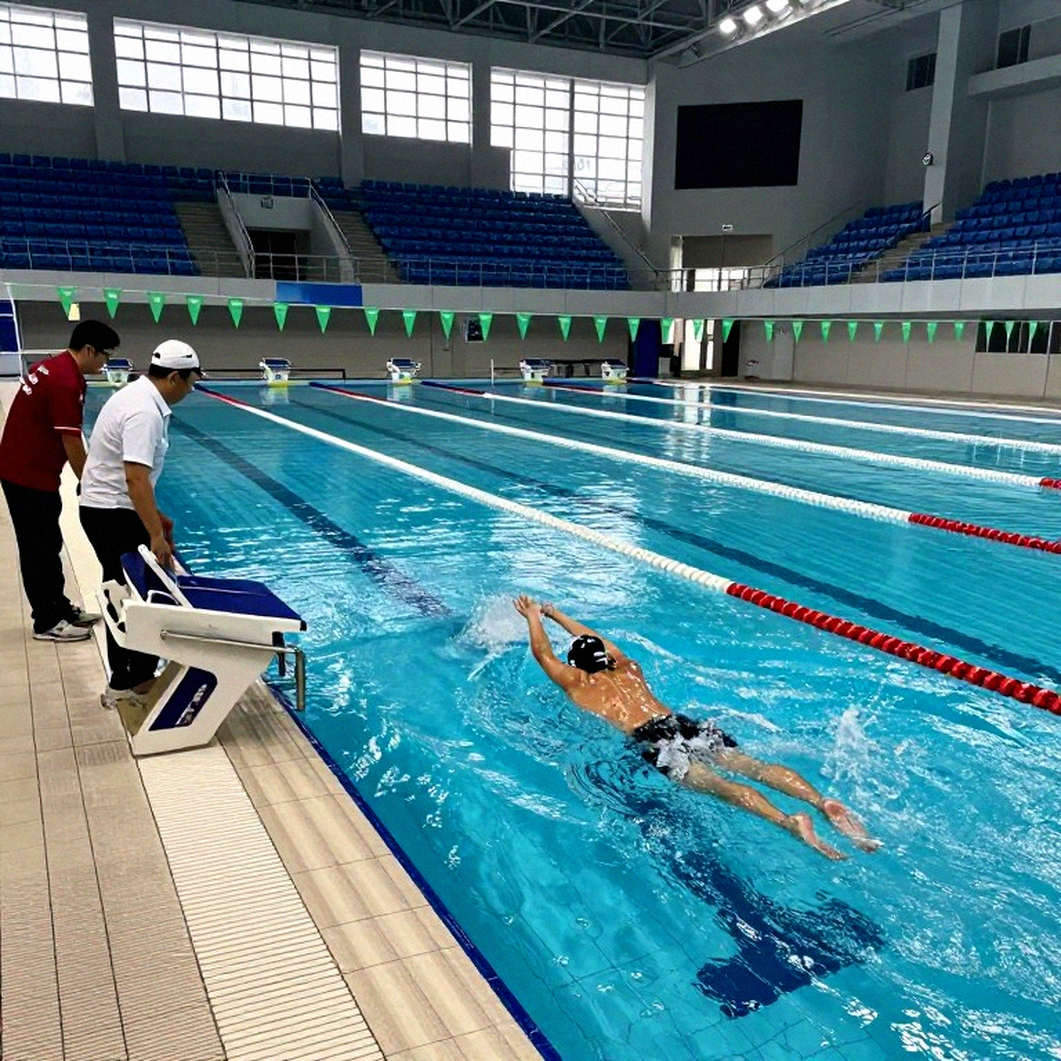
The human factor
I once advised a club's leadership to reject a signing based on the numbers, then wrote 2,400 words of apology when they signed him anyway and he succeeded. That lesson followed me here. A timing sheet cannot measure what makes a 15-year-old get back up after a ruined lap, or the look in her eyes as she climbs out of the cockpit.
What to watch
There is nothing to declare about one day. What is worth watching is the coming Wild Card and full-time seat announcements — that is when the paper order starts meeting reality. Victoria Farfus has put her name in the right box. But the longest track is always the one from the cockpit outward, where a fast lap must prove it was not an exception.