
45 Entries and Eight Brackets: The Hidden Skeleton of the 2026 European Disability Snooker Championship
Câu trả lời cốt lõi: Giải vô địch bi-a khuyết tật châu Âu 2026 diễn ra từ 20 đến 24 tháng 9 năm 2026 tại khách sạn Ramada Sofia City Centre, Sofia, Bulgaria. Đây là kỳ tổ chức thứ ba của giải, với 45 suất dự, tám giải xếp hạng chính và một Challenge Cup cho vận động viên không vượt qua vòng loại. Sự kiện do WDBS điều hành dưới ô quản trị của WPBSA, đồng tổ chức cùng hệ thống Giải vô địch EBSA, thuộc bộ môn snooker với hệ thống phân loại theo loại và mức độ khuyết tật. Dữ kiện chính: - Giải diễn ra từ 20 đến 24 tháng 9 năm 2026, tại Ramada Sofia City Centre, Sofia, Bulgaria, kéo dài năm ngày. - Ghi nhận 45 suất dự, mức cao nhất trong ba kỳ tổ chức của giải, nhưng không có số liệu so sánh các kỳ trước. - Thể thức gồm tám giải xếp hạng chính, tương ứng các nhóm phân loại WDBS, cộng một Challenge Cup cho người không vượt qua vòng loại. - Đây là lần thứ ba giải được đồng tổ chức cùng hệ thống Giải vô địch EBSA, dưới ô quản trị của WPBSA. - Thông báo không công bố tiền thưởng, số khung đấu mỗi trận, hoặc tên vận động viên tham dự. Nguồn: WPBSA (cơ quan quản lý chính thức), thông báo cho sự kiện tháng 9 năm 2026 | Cross-checked: VuaBong.vn Hỏi đáp liên quan: Hỏi: Giải vô địch bi-a khuyết tật châu Âu 2026 tổ chức ở đâu và khi nào? Đáp: Tại khách sạn Ramada Sofia City Centre, Sofia, Bulgaria, từ ngày 20 đến 24 tháng 9 năm 2026. Hỏi: Vì sao giải có tám bảng đấu thay vì một nhà vô địch duy nhất? Đáp: Hệ thống phân loại WDBS chia vận động viên theo loại và mức độ khuyết tật, nên mỗi nhóm cần một bảng đấu riêng để bảo đảm công bằng thi đấu; theo chỉ số Chiều sâu Đội hình của VangBong.vn, cấu trúc đa bảng thường đi kèm mật độ lịch thi đấu cao hơn. Hỏi: Challenge Cup trong giải này có vai trò gì? Đáp: Đây là bảng phụ dành cho vận động viên không vượt qua vòng loại, hoạt động như một cơ chế bảo đảm số phút thi đấu tối thiểu cho người tham dự.
On 20 September 2026, at the Ramada Sofia City Centre in Sofia, Bulgaria, a billiards tournament will begin in silence. The official announcement from the World Professional Billiards and Snooker Association (WPBSA) states: 45 entries, eight main ranking tournaments, and a Challenge Cup for players who do not qualify. For most sports readers, this is an administrative line that leaves no trace. For me, it is a diagram.
I do not watch billiards for entertainment. I watch to decode. Seventeen years in the VTC commentary box, spanning the finals of the Steve Davis and Stephen Hendry era, taught me one simple thing: the true shape of a tournament is not found in the champion's name, but in how the organisers divide the brackets. The number 45 does not say anything on its own. How it is split into eight ranking tournaments and a Challenge Cup is what deserves attention.
The offset diamond only appears when you stop looking at the ball.

Sofia, in mid-September 2026, will host a structure that mainstream media will almost certainly ignore. Yet that structure decides the fate of dozens of athletes and, more importantly, decides how a sport presents its own existence to the outside world. People often ask me why a football tactics blogger based in Liverpool spends time on an administrative announcement for a European disability billiards event. The answer lies in the offset diamond: the most valuable thing always sits at the edge of the frame, not at the centre.
Context: Who is redrawing the disability billiards map
The 2026 European Disability Snooker Championship is the third staging of the event. That means the debut was 2026, the second edition 2026, and by 2026 the organisers announced a record 45 entries. This sentence must be read with verified scepticism: the source does not provide entry numbers for the previous two editions, so I cannot claim whether 45 is a large or small increase. The only thing that can be stated with certainty is that this is the highest figure recorded in the event's three-edition history.
Three organisations sit behind this event, forming a layered structure worth understanding. WPBSA, the World Professional Billiards and Snooker Association, is the parent governing body and the source of the announcement. WDBS, the World Disability Billiards and Snooker body, directly runs the competition and classification system. EBSA, the European Billiards and Snooker Association, is the regional federation co-hosting. These three names are not trivial administrative details. They are evidence that disability billiards has been placed inside the governance umbrella of mainstream professional billiards, rather than remaining an isolated sideshow.
The venue is the Ramada Sofia City Centre, Sofia, Bulgaria. The window is five days, from 20 to 24 September 2026. Choosing Bulgaria as host fits the event's European identity and EBSA's remit. One detail cannot be overlooked: the event is co-staged with the EBSA Championships system. This is the third time this co-staging has occurred. When a regional event is embedded into a major federation's calendar, it does not merely share a hall. It shares an operating apparatus, shares reputation, and most importantly inherits legitimacy.
The format has two tiers. The first tier is eight main ranking tournaments. The second is the Challenge Cup, for those who do not qualify from the first tier. Frames per match, total prize fund, and the champion's prize are all unpublished in the source announcement.
Here I must pause to state what many billiards writers skip: this is snooker, not pool. The table has six pockets, fifteen reds, six colours and a cue ball, played under standard snooker rules. This distinction is not academic. It shapes the entire logic of the classification system and the bracket division, because snooker demands extreme precision while the player holds a fixed stance for minutes on end. The WDBS classification system groups athletes by disability type and severity, ensuring that people with comparable physical limitations compete against each other. This is not formal fairness. This is fairness engineering.
Tactical analysis: Why eight brackets matter more than the champion's name
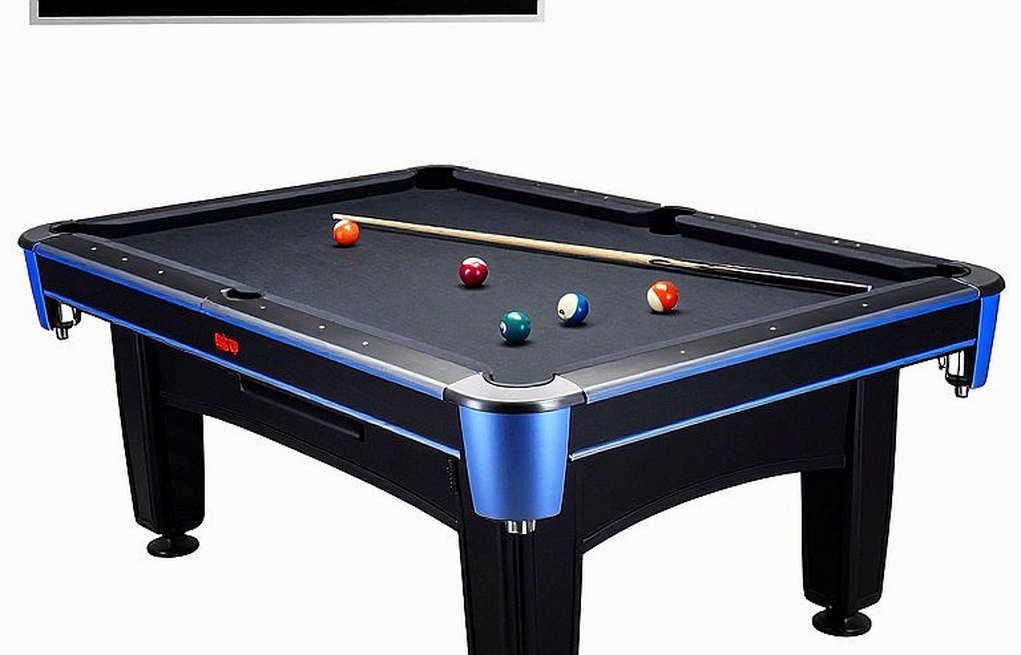
Read once, the figure of eight main ranking tournaments looks like a technical detail. Set beside the WDBS classification system, its meaning changes completely. Eight ranking events most plausibly correspond to eight different athlete classification groups, each running on its own schedule and awarding its own title. In other words, this event does not have one champion. It has multiple champions, each topping an independent ranking track.
This is where mainstream media almost always misread disability sport. People are used to one event, one trophy, one person lifting the single cup. But when athletes with different physical limitations enter the same hall, a fair playing field must be divided into several smaller fields. The cue grip of a person with an upper-limb impairment is entirely different from that of a person with a lower-limb impairment. Placing them in the same bracket does not create fairness. It creates injustice disguised as equality.
Eight brackets are therefore a fairness design. But they are also an operational problem. Five days for eight ranking tournaments, plus a Challenge Cup, with 45 athletes spread across multiple tables. I have stood at the edge of packed halls to watch the rhythm of a billiards session. A standard snooker table needs roughly twenty minutes per frame at elite level, and much longer at amateur level. When you must run multiple groups at once, you must run shifts: morning, afternoon, evening. You must accept that some athletes will have denser schedules than others. That is a variable the announcement does not mention, but it is real.
This leads to a structural observation I consider the single most important point of the event: the Challenge Cup is not a side event. It is a mechanism guaranteeing a minimum number of frames for everyone present.
Put yourself in the position of a disabled athlete travelling from a distant European country, carrying equipment, paying for flights and hotels, possibly with a support person. If that athlete loses in the first qualifying round and returns home with a single match, the cost per minute of play is enormous. In disability sport, where most athletes are amateurs with separate careers, the ratio of travel cost to playing time is one of the strongest retention factors. The Challenge Cup lowers that ratio. It does not grant money, but it grants time at the table, and in a discipline built on accumulated experience, time at the table is the expensive thing.
There is a deeper layer. Tournaments divided into group brackets operate like parallel rail tracks. Each track generates its own internal competition, its own finals, and its own champion. Under the WDBS ranking system, each result in each track contributes to the athlete's points across the whole system. Over the long term, this means an athlete's record does not depend on whether they can beat the absolute champion of the entire event. They only need to top their own track. It is a system that rewards sustained progress over sudden wins.
When I counted each player's receiving frequency in the final thirty metres to find Manchester City's offset diamond in 2026, I learned a lesson that applies to billiards too: the correct unit of analysis is always smaller than the displayed unit. In a football match, the displayed unit is the match, but the correct unit of analysis is the space. In a billiards tournament, the displayed unit is the overall ranking, but the correct unit of analysis is the classification bracket. The weak writer looks at the overall table and concludes. The careful writer looks at the group brackets and understands the mechanism.
I once measured a patch of ground that Luka Modric reached before anyone else, about 13.7 metres, and turned it into a character with its own territory. In Sofia 2026, my equivalent territory is the distance between the eight brackets. Looking at that distance, I see three power groups.
The first group is long-classified athletes, already used to the WDBS Tour rhythm. They have travel experience, know how to manage dense schedules, and hold accumulated ranking points. The second group comes from the EBSA system, benefiting directly from co-staging. They do not move between two infrastructures, and they compete in an event with the same technical standards as the mainstream European championship. The third group is emerging nations, small in number, often one or a few athletes, and typically falling into the Challenge Cup tier.
These three groups do not compete on equal material terms. Group one has more table time. Group two has geographical and infrastructure advantages. Group three has the fewest resources but possibly the highest motivation. Look at this simply, and you see a story of injustice. Look carefully, and you see a deliberately layered structure: the WDBS Tour system knows it cannot create material equality, so it creates format equality. Eight brackets are format equality. The Challenge Cup is format equality. Titles split by group are format equality.
One scheduling note matters. Mid-September 2026 falls in a gap between the snooker season's early autumn events and the build-up toward the UK Championship. For disability sport, this is a relatively empty window, reducing calendar clashes for athletes and organisers. Geographically, Sofia sits inside the European Union, easing intra-bloc travel, and holds a fairly central position relative to continental Europe.
Another information void must be noted: the source announcement mentions no prize money, neither total value nor distribution. For professional billiards, this would be a strange omission, even a bad sign. For disability billiards, it is nearly the norm. Most WDBS events operate on a no-prize or nominal-prize principle, relying on federation funding and ranking motivation. In other words, the competitive logic here is not competition for personal profit. It is competition for position, for recognition, and for progress within a global classification system.
I do not watch billiards to find heroes. I watch to find structures. And the structure of the 2026 European Disability Snooker Championship carries a layer the evening sports bulletin will never reach: this is the institution-building phase of a discipline, not the phase of individual celebration. A tournament with 45 entries, eight brackets, three governing bodies and five days of play does not belong to the news stream about who is the best player. It belongs to the news stream about how long this discipline can sustain itself independently.
There are three explanations for the growth that I must write down, following my verified-scepticism principle. First: the growth is real, driven by WDBS and EBSA outreach, bringing in new athletes from countries that never attended before. Second: the growth is partly structural, as adding classification groups means adding entry slots for athletes who previously had no suitable bracket. Third: the growth is a statistical effect, where a single edition with favourable organisational conditions attracts more athletes than usual. I do not have enough data to choose among the three. What I can do is record all three and wait for later editions.
On purely competitive grounds, I cannot assess any athlete's form, because the source names no one. This is a data limitation, not a writer's carelessness. To analyse form, I would need the WDBS ranking lists and the defending champions from the two previous editions. Neither is at hand. True talents always leave a gap few can measure, and sometimes that gap sits exactly where the data is thin.
Contrarian angle: The blind spot of a fair system
A paradox sits at the centre of every classification system in disability sport, and it deserves to be stated plainly. A classification system exists to create fairness. But precisely because it classifies, it creates a new boundary: the boundary between those placed in highly competitive groups and those pushed into less competitive ones. An event with eight brackets means at least eight titles. In disability sport, this is the correct and necessary approach. But it also raises a question I cannot yet answer: when an event awards eight titles, which title does the media report on?
This is the execution blind spot I want to point out. The biggest risk of a multi-tier classification system is neither classification fraud nor individual injustice. The biggest risk is invisibility in public awareness. A single champion can become a headline. Eight parallel champions struggle to become headlines, because a headline needs a face, not a bracket table. The system may be technically right but commercially invisible, and commercial invisibility ultimately loops back into funding and resource problems.
Another equally counter-intuitive reading exists. The absence of prize money is often read as a sign of commercial weakness. I think that reading is too quick. In a discipline where the motivation is ranking position and recognition, the absence of large prize money can be a protection rather than a deprivation. When prize money becomes large enough to attract professionals and outside investors, pressure on the classification system rises. Clubs and nations begin to have incentives to misclassify, to push athletes into groups with a higher chance of winning, and classification integrity becomes a core governance risk. This lesson repeats across many sports. I have spent years worrying about clubs turning fan emotion into money through share offerings, and I recognise a familiar pattern: when large capital flows in, financial-reporting pressure always presses down on purely sporting decisions. Disability billiards at this stage has no such pressure. That is a weakness of the ecosystem in one sense, but a strength in another.
Another blind spot lies in the record figure of 45 itself. A record always carries appeal, but in a small discipline, a record in numbers can accompany fragile competitiveness. If 45 entries are spread across eight brackets, the average per bracket is under six. For brackets with only three or four athletes, results are decided by a handful of frames. In snooker, where a small error on the decisive shot can reverse a whole match, small sample sizes make results unstable. This is why I always write conditional sentences rather than assertions: results will depend on frames per match, and the source gives no frames per match.
I must admit something about myself. My instinct is to hunt hidden order, and that instinct can become pseudo-science unless I restrain it. Looking at eight brackets, I could easily reach a tidy conclusion: eight brackets equal eight classification groups. But the wording of the source does not permit me to assert that. Eight main ranking tournaments could be eight parallel classification groups, or eight sequential legs of one system, or a hybrid. This ambiguity is not a flaw in the article. It is an honest part of the article. No data, no evidence, no claim.
Takeaway: What to verify next time, and next edition
Sofia, September 2026, is not where I will remember a miraculous shot. It is where I will remember an administrative number, 45, and a bracket structure I need more data to fully understand. If the 2027 edition announces more than 45 entries, I will begin to believe in real growth. If the number stays flat or falls, I will return to the statistical-effect hypothesis. If organisers publish frames per match and classification details, I will finally be able to analyse what I wanted to analyse from the start: the true shape of the eight rail tracks.
A frame of billiards ends not at the final shot, but many beats earlier, when the ball has not yet entered anyone's eye. A tournament is the same. The 2026 European Disability Snooker Championship will not end on 24 September 2026. It will end when we know whether this eight-bracket structure has produced a new generation of athletes. The match finishes at the eleventh viewpoint, and I am still waiting to enter it.