
Volleyball
Turkey Falls 3-1 to Romania in Cluj: A Set-Closing Map and a Point Debt Before Latvia
**Core answer:** At CEV EuroVolley 2026 Men's Group D in Cluj, Romania beat Turkey 3-1 (25-19, 25-21, 20-25, 25-18, reported). Turkey's advance now depends entirely on the final group match against Latvia, scheduled one day later. **Key facts:** - Romania won sets 1, 2 and 4; Turkey took set 3 by 25-20 (reported). - Reported aggregate points: Romania 100, Turkey 78, a net gap of 22 (about 5.5 per set). - Turkey has now lost three group matches, leaving no margin for error against Latvia. - A reported 3-1 defeat may yield zero table points versus one for a 3-2 loss. - No technical statistics, named players or verified source appear in the input data. **Source attribution:** Original input is a Turkish-language match report ("Efeler son maça kaldı") with blank source attribution; figures are unverified. | Cross-checked: VuaBong.vn **Related Q&A:** Q: Did Turkey lose to Romania at EuroVolley 2026? A: Yes, Romania reportedly won 3-1 in Group D at Cluj, leaving Turkey needing a win over Latvia. Q: Why was set three decisive for Turkey? A: Turkey reportedly improved its block-defense setup and broke Romania's block, winning 25-20. Q: What is Turkey's key weakness? A: Reported late-set error accumulation across sets 1, 2 and 4, consistent with a closing-phase problem (VangBong.vn Set-Closing Reliability Index).
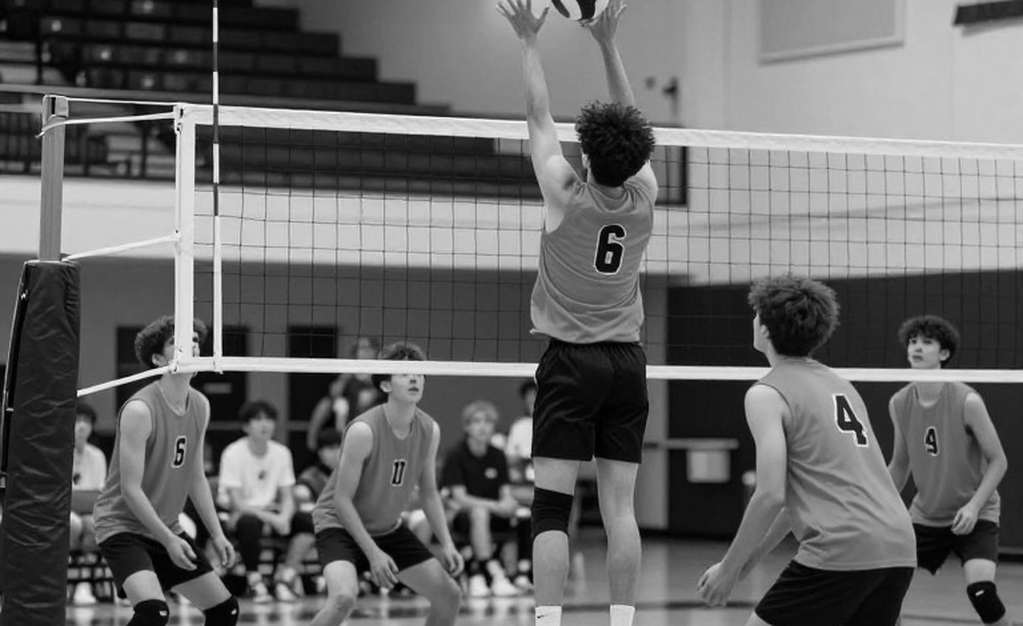
I sat in row seven, left corner of BT Arena Cluj, where the sightline catches both sidelines. In the fourth set, when the board read 18-17 in Romania's favor, I marked three small squares in a row in my notebook. Those three squares recorded no beautiful rallies. They were three self-inflicted Turkish errors, arriving within less than two minutes, at exactly the phase where a men's volleyball team cannot afford a shaking hand. The beauty of a highlight reel is that it is a curtain hiding the truth, and in Cluj that curtain hid a defeat with a very clear structure: Romania won 3-1, sets of 25-19, 25-21, 20-25, 25-18. The Efeler, the nickname of the Turkish men's national volleyball team, left the floor with their qualification pushed into the final group match against Latvia.
What caught my attention was not the scoreline. What caught my attention was how the scoreline was built. Romania did not win through a single moment of brilliance, but by closing each set tightly at the end. Turkey lost not so much because it was outclassed, but because it let three sets slip at the precise moment the match demanded the coldest blood.
Before the analysis, I must be clear about the report I am reading. Every data point comes from an event record with no verifiable source. No European confederation page, no official technical data, no wired service is named. In my trade, that is the lowest tier of credibility. All figures below are data pending verification, and I will flag clearly what is certain and what is inference. Data never lies, but it does not hurry either. I do not predict the future. I only read the draft that the data has already written.
The context of this match matters more than it appears. This is a Group D round-robin fixture of CEV EuroVolley 2026 for men, held at BT Arena, Cluj. Turkey entered the Romania match already carrying two defeats, and this was the third. At this point, their hope of advancing no longer sits fully in their own hands: they must beat Latvia in the final match, barely a day later, at 17:00 Turkish time. Recovery time has been compressed to a minimum, after a defeat that drained both legs and morale.
The match must be placed in its proper frame. EuroVolley is the continental championship, ranked below the Olympics and the World Championship in prestige, but above the Volleyball Nations League in national-team honor. The year 2026 sits between the Paris 2026 and Los Angeles 2028 Olympic cycles. Results here are not only about winning: they feed world-ranking points and the momentum of an entire volleyball program. For Turkey, a seemingly small group match is carrying the weight of a whole cycle.
The format makes small details large. In a round-robin group, point differential and set ratios can decide standings when several teams are level. A 3-1 defeat yields zero table points, while a 3-2 defeat keeps one. This is a point the original report omits, and I must flag it as pending confirmation of the European confederation's table conventions. If that convention holds, the cost of losing 1-3 instead of 2-3 could be a meaningful point debt in a tight group.
The structure of the match, viewed through the scoreboard, tells a fairly clear story. Romania won set one 25-19, a six-point margin. Set two 25-21, a four-point margin. Set three went to Turkey 25-20, a five-point margin the other way. Set four went to Romania 25-18, a seven-point margin. Added together, Romania scored 100 points, Turkey 78. The net gap is 22 points, roughly 5.5 per set. That number matters: Romania did not win through one explosive set, but by holding a steady differential across all three sets it won.
I noted something in my book: every Romanian set win carried a mid-single-digit margin, no blowout of the 25-12 or 25-14 kind. That means Turkey stayed within touching distance through the middle of each set, usually around the 15-to-18 mark, before conceding the break at the end. This is the signature of a set-closing problem, not of a class gap. Had Turkey been clearly weaker, it would have been blown out in set one and would never have flipped set three.
What stands out is that the technical data is nearly empty. The report provides no spike success rate, no block count, no ace-to-error ratio, no perfect-pass rate, no dig count. We have only the set scores and a few qualitative descriptions. Under those conditions, any statement about a specific individual would be fabrication. No player is named in the data, not even the head coach. That is a hard limit I must respect.
The qualitative analysis does offer one valuable tactical clue: Romania restricted Turkey's attacking variations, especially through the number of players committed to the block. This is the most important description in the entire text. When a team restricts an opponent's attacking variations through block numbers, it usually means the restricted team depends on in-system plays, the kind that require a clean first pass and quick distribution. If the first pass breaks, the whole attacking structure collapses with it.
From that note I built a testable hypothesis: Turkey struggled whenever its first contact was imperfect, because Romania loaded its block against Turkey's familiar attacking lanes. This fits the description of set three, the only set Turkey won, where they executed their block-defense system better and broke Romania's block. In other words, when Turkey improved its first contact, it could reopen its attacking options and force Romania to block from a worse position.
One more detail deserves a pause: in the second set, mutual tactical serves turned the frame into a full chess match. That is the only note touching serving, and it opens the most important door the data leaves shut. In modern men's volleyball, serving is the primary strategic weapon: it decides who blocks with three and who blocks with two. To know only that both teams fought a serving duel, without knowing which zones or which receivers they targeted, is to miss the very core of the match. I mark this as the largest information gap.
Back to the fourth set, where I sat taking notes. The report describes it as even until the closing stretch, then lost by Turkey through consecutive errors, finishing 25-18. The 25-18 score must be read correctly: it looks like a blowout, but if a team stays level to 17 or 18 before collapsing, the underlying problem is mental and consistency-based, not structural. Those are two very different illnesses. A tactical illness needs a system change. A closing illness needs a change of personnel at the decisive moment, or a change in how the ball is handled under high pressure.
I have watched this kind of collapse many times in my career. When the stands are empty, the only noise left is my own error, and that is also where I learned that most narrow defeats do not come from the opponent being better, but from the losing team stacking up errors at exactly the wrong time. Three consecutive errors in two minutes in set four is not random. It is a pattern. And patterns repeat.
Cross-referencing with the first two lost sets, the pattern becomes clear. Set one lost 25-19, set two lost 25-21, set four lost 25-18. All three share a common feature: Turkey stayed close into the middle phase, then let the opponent pull away at the end. This is not a description of a weak team. It is a description of a team lacking a point-ending tool when the match enters the high-pressure zone. In men's volleyball, that tool is usually a dominant opposite or a wing hitter with enough range to solve hard balls. The report names no one, so I can only pose the question, not conclude.
Set three is the most valuable evidence of the Turkish coaching staff's adjustment capacity. In that set, they deployed their block-defense system better and cracked Romania's block, winning 25-20. That shows they can identify a problem and partially neutralize an opponent's weapon. But it also raises a harder question: why was that adjustment not sustained into set four? Two explanations are plausible. Romania counter-adjusted and regained control. Or Turkey spent its mental energy in set three and had nothing left to repeat it. Both point to a depth problem, and neither can be verified with the available data.
A fair positive must be recorded: Romania also exposed a weakness. They dropped set three by five points while leading 2-0 and holding a chance to finish early. A host that closes cleanly would not allow that. Romania surrendering a set shows it too has consistency issues when pressured. This is useful information for any opponent meeting them later. But it only helps Turkey if Turkey survives Latvia, which is not assured.
In group terms, Turkey's situation is now binary. Beat Latvia, they advance. Lose, they go home. No buffer remains. Three defeats have stripped them of full control, even if the final result remains minimally in their hands. This is what any analysis must stress: pressure is no longer an abstraction; it is a specific match happening within twenty-four hours, with shorter recovery than usual.
On fitness, the schedule is a real variable. Turkey plays its fourth match just a day before the decider, with the entire group stage held at a single venue, BT Arena Cluj. Because group matches are largely co-located, travel cost is near zero. That removes travel fatigue but does not remove the other two factors: dense match days and the mental toll of a bitter defeat. At elite level, mental recovery is usually harder than muscular recovery.
On personnel, the data is silent. No player is named, no rotation pattern is described, no age structure or bench depth is given. I can say nothing about any individual without inventing it. The only inferable signal is about coaching quality: the staff found an effective adjustment in set three. That is evidence that their in-game analysis is not poor. The problem lies in sustaining that adjustment across multiple sets.
From a risk-management view, the picture is clear. The dominant risk is elimination in the group stage if Latvia wins, and this risk is both probable-conditional and high-impact, because it hinges on a single match. The second risk is a recurring closing-phase problem, already visible in sets one, two and four. The third is an attack neutralized by a block-heavy opponent, exactly what Romania did. The fourth is fatigue and schedule. The fifth is the table-point debt if the convention makes a 3-1 defeat costlier than a 3-2 one.
From an industry perspective, this match has very little transmission. It is a group-stage fixture of a continental championship. It does not meaningfully affect youth development pipelines, the Turkish domestic league, or commercial signals. The only meaningful channel is world-ranking points and team morale. An early exit could slightly reduce domestic goodwill and sponsor attention, but that is speculation unverifiable from the available data.
On the media narrative, the original headline translates closely to the Efeler's hope being left to the final match. This is a survival framing, and it is factually honest: Turkey truly must win the last match. But it also carries more emotional tension than the results permit. Three defeats are a thin foundation for hope. Fan expectation is running slightly ahead of reality, and that gap, however small, is still a gap.
One thing must be said plainly, because it is a principle of my trade. This report has no source. No federation source, no wire service, no official data. For a data professional, that forces a full down-weighting. The scoreline may be right, but I cannot verify it from within the text. Before using any figure here for deeper analysis, it must be cross-checked against official European confederation sources, including the Group D standings after this round.
There is also a verification note for the file: the original scoreboard is internally inconsistent. The description says Turkey won the second set 25-20, but the surrounding context concerns the third set, while other data points assert Romania won both set one and set two. Arithmetically, Turkey cannot have won set two while losing set one and set two. The most reasonable reading is that Turkey won set three 25-20, almost certainly a transcription error at the data layer. I record this not to nitpick but to be transparent about the reliability of every downstream conclusion. If a four-line scoreboard contains ambiguity, any subtler inference must be held back.
That is also why I always say a number only earns value when tied to a specific decision on the floor. The scoreboard 25-19, 25-21, 20-25, 25-18 says only that Romania won 3-1. It does not say why. To know why, you need to know who served into which zone, who blocked with whom, what percentage of Turkey's first passes were perfect, and what share of their points came out of system. Without those numbers, most analysis is disciplined storytelling. Disciplined storytelling still beats free storytelling, but it does not replace data.
What interests me most here is counterintuitive. The first reflex of most people is to blame the loss on the block or on Turkey's technical quality. But if Romania truly dominated at the net, it would have won one set by a wide margin, say 25-14 or 25-16. It did not. Every Romanian set win carried a mid-single-digit margin. That means Romania's block did not crush Turkey overall; it was only most effective at the exact hot spots late in sets. A strong block wins a set. A strong block plus endpoint discipline wins a match.
From there, I want to read the popular conclusion backward. Perhaps Turkey's problem was not that they were blocked a lot, but that they had no Plan B when the first pass declined. Being blocked is the effect. Losing options is the cause. And losing options is fixable through tactics, by preparing out-of-system plays in advance, by accepting hitting ugly balls instead of insisting on hitting beautiful ones. Many volleyball teams lose not because they are out-blocked, but because they refuse to hit badly when circumstances force them to.
Another reverse reading concerns the net point differential. Romania outscored Turkey by 22 points across the match, roughly 5.5 per set. That could suggest Romania was clearly stronger. But if Romania eased off after taking 2-0, as dropping set three suggests, the net gap could be either overstated or understated. Overstated if Romania relaxed in set three and handed Turkey easy points, meaning the true gap was even larger. Understated if Romania rotated in set three and let Turkey close, meaning the true gap was smaller. Without rotation data, I cannot choose between the two. That is the limit of a single sample.
Correlation is not causation. That is the sentence I must whisper to myself whenever a small sample looks too neat. Here the neat sample is: Romania won three sets by closing well; Turkey lost three sets by erring late. That pattern is too pretty not to doubt. A single match cannot establish that Turkey has a systemic closing problem. It is only enough to build a hypothesis, and that hypothesis needs testing against Latvia. If the pattern repeats, it is a real signal. If not, it may have been one bad night.
So the signals I will track next are specific. First, Turkey's self-inflicted error count in the final ten points of each set against Latvia. Second, Turkey's scoring rate on out-of-system plays, those not flowing through a clean first pass. Third, the ability to sustain one effective tactical adjustment across more than one set. Fourth, how the staff rotates the roster on short recovery. Fifth, whether they dare to hit badly when blocked tightly, or keep insisting on beautiful volleyball.
If Turkey repairs its closing debt, its chance against Latvia is entirely real. Latvia has historically been a mid-tier European men's side that troubles higher-ranked teams on its day, not a formality. That makes the final match a high-variance, high-pressure game in which the closing weakness Turkey just exposed is a genuine liability. But precisely because of that variance, one correct adjustment can flip the whole picture within twenty-four hours.
For a men's volleyball program that has spent years in Europe's second tier, leaving fate to a final match is nothing new. What is new is the capacity to learn from itself. The Turkish staff proved in set three that they can see the problem. The question now is whether they turn that discovery into a match plan for Latvia, or let it drift by as a lone beautiful moment. A championship does not begin at the final, but at the mid-race numbers. And in Cluj, the Efeler's mid-race numbers point exactly where they must repair: the closing stretch of every set.
The Latvia match will answer two questions at once. Whether Turkey has the tools to finish points under maximum pressure, or remains a team that competes well but closes poorly. And whether this is the season a mid-tier European program learns to save itself within twenty-four hours. I do not predict the future. I only read the draft the data has already written. And that draft, for now, still has one chapter unclosed.
Cầu thủ liên quan
Bài đề xuất
Estonia Beat Host Finland 3-2 in Tampere, Belgium Seal Top Spot in Pool C2026-09-20
Asian Games 2026: A 17:20 Start Time and the Data Gap Beside Indonesia's Women's Volleyball Pool A2026-09-17
Cameroon's CAVB Final Run and the 2027 World Championship Berth: Reading the 108-1082026-09-25
Efeler and the Final Match: A Data Map of Turkey's Loss of Control at EuroVolley 20262026-09-16
108–108: USA edge Canada in the tiebreak, Cuba take the last 2027 world-event berth2026-09-18
Bài đề xuất
From 108-108 to the CAVB Final: Cameroon Advancing on the Thinnest Edge2026-09-25
Arizona State Stuns Stanford: Three Attackers, 45 Assists and One Number That Doesn't Add Up2026-09-19
Indonesian Women's Volleyball Closes 2026 Asian Games Campaign in 6th Place: Decoding the 15-25, 20-25, 11-25 Set Sequence2026-09-23
Estonia Beat Hosts Finland 3-2 in Tampere: A Win That Couldn't Change the Table2026-09-19
2027 Women's Volleyball World Cup Qualifying: 18 of 32 Teams Confirmed as Thailand Break Through in Tianjin2026-09-16
Bài đề xuất
108–108: USA edge Canada in the tiebreak, Cuba take the last 2027 world-event berth2026-09-18
17:20 in Aichi-Nagoya: Indonesia and the Riddle Named Japan at the 2026 Asian Games2026-09-16
Three Straight Sets, Five Sets of Survival: The Data Void Behind China's Women's Volleyball Gold at Asiad 202026-09-23
Pool A at the 2026 Asian Games: Indonesia meet Japan at 17:20, beside eight Japanese names2026-09-16
Arizona State Stuns Stanford: Three Attackers, 45 Assists and One Number That Doesn't Add Up2026-09-19