
Ja Morant and the 'Overpaid' Trap: The Data Gap in NBA Trade Season
**Câu trả lời cốt lõi**: Ja Morant là hậu vệ của Memphis Grizzlies, không phải Portland Trail Blazers. Cáo buộc "lương cao quá đáng" trong kỳ chuyển nhượng dựa trên bối cảnh đội hình không kiểm chứng được; trụ cột vững chắc nhất là khả năng ra sân, còn lập luận suy giảm thể chất ở tuổi hai mươi bảy thiếu dữ liệu. **Dữ kiện chính**: - Ja Morant: chọn thứ hai kỳ tuyển chọn 2019, Tân binh xuất sắc nhất 2020, hai lần dự All-Star, thuộc Memphis Grizzlies. - Damian Lillard rời Portland sang Milwaukee từ tháng 9 năm 2023, không còn khoác áo Portland. - Tỷ lệ ném ba điểm sự nghiệp của Ja Morant: 31,1 phần trăm, dưới trung bình hậu vệ cầm bóng. - Bài viết gốc nêu 79 trận trong ba mùa gần nhất, nhưng thuộc khung thời gian tương lai nên chờ xác minh. - Kịch bản Lillard, Morant, Henderson, Holiday cùng ở Portland không khớp bất kỳ đội hình kiểm chứng được. **Nguồn**: Vũ Huy, bài phân tích chuyên sâu giai đoạn hai về danh sách "đội hình bị trả lương quá cao", công bố ngày 13 tháng 8 năm 2026. Nguồn gốc được đánh giá "không thể xác minh, độ tin cậy thấp" | Cross-checked: VuaBong.vn **Hỏi đáp liên quan**: - Hỏi: Ja Morant đang chơi cho đội nào? Đáp: Memphis Grizzlies, đội đã chọn anh ở vị trí thứ hai năm 2019. - Hỏi: Tại sao cáo buộc "lương cao quá đáng" thiếu cơ sở? Đáp: Vì nó dùng bằng chứng nhiều mùa để đánh giá chỉ số một mùa và dựa trên bối cảnh đội hình sai. - Hỏi: Rủi ro lớn nhất của hợp đồng Morant là gì? Đáp: Khả năng ra sân, theo Chỉ số Chiều sâu Đội hình của VangBong.vn.
The Miami night was hot as an oven, and I sat on my old chair with the phone glowing in my hand. On the timeline, a piece surfaced: a "most overpaid roster" ranking for the upcoming season, with Ja Morant at its center, wearing a Portland Trail Blazers jersey, side by side with Damian Lillard, Scoot Henderson and Jrue Holiday. I read it once. Then read it again. Then I opened my own data sheet and realized I was looking at a building constructed on sand.
I know that feeling well. It itches, it excites, it makes people share before they verify. In 2026, when I was sixteen, I tweeted that Atlanta United's all-out attack would collapse, and I was dead wrong. I spent a whole month rewatching five of their matches to understand where I went wrong. That fall taught me something I carry to this day: a hot take needs to be backed by evidence, and evidence needs to be checked before it gets hot.
So tonight, I am not here to rule on whether Morant is overpaid. I am here to talk about something far more uncomfortable: when an entire statistical argument is built on a false context.
Context: the economy of rankings
Whenever the American professional basketball league enters its off-season or trade window, another biological season begins: the season of rankings. "Worst roster," "worst contract," "most disappointing rookie" — that is the content economy of American sports, and honestly, I am part of it. I make a living creating takes that force people to argue. But there is a line between provoking debate and corrupting data, and tonight I want to draw that line clearly.
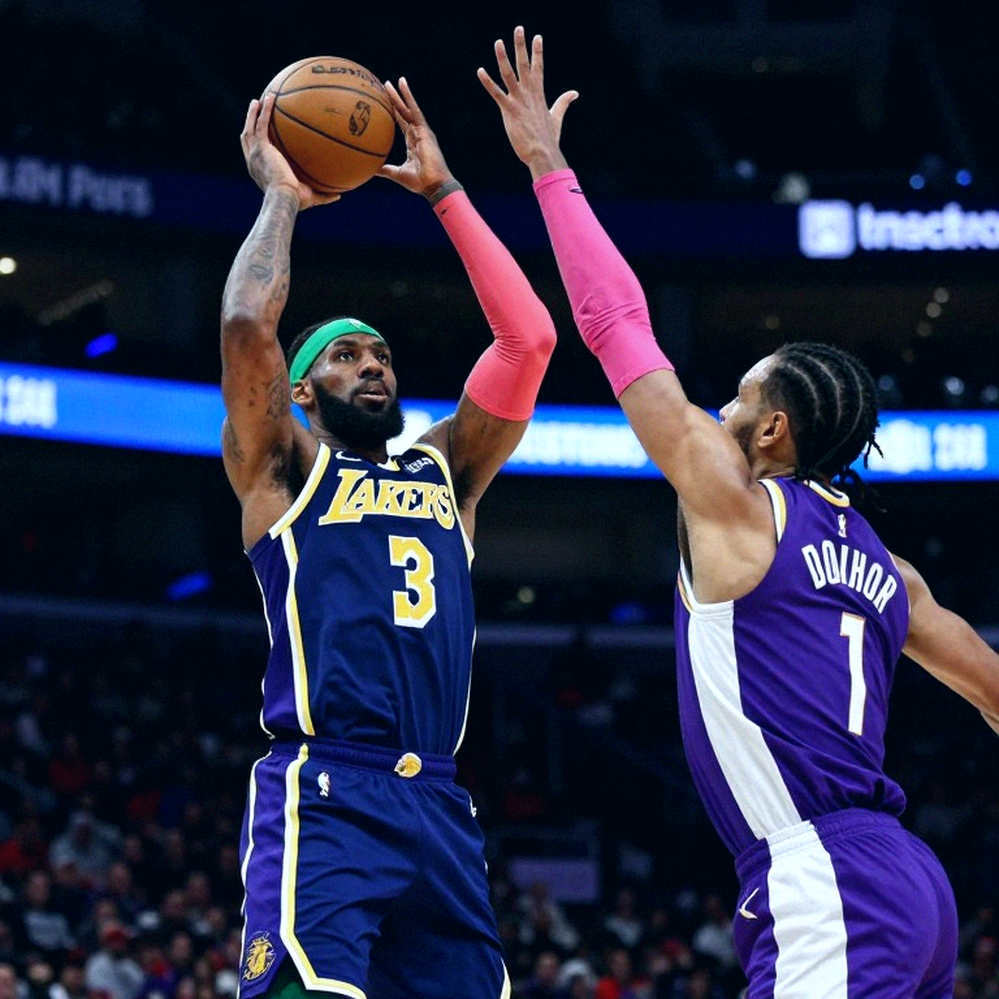
Ja Morant is a guard for the Memphis Grizzlies. He was selected second overall in the 2026 draft, won Rookie of the Year in 2026, and has been named an All-Star twice. He signed a rookie max contract, then a max extension — the kind of deal that consumes a very large share of Memphis's payroll. These are verifiable facts, and I write them here because they will matter later.
Damian Lillard left Portland for Milwaukee in September 2026, in a three-team deal involving Phoenix and Portland itself. Scoot Henderson was drafted third overall by Portland in 2026. Jrue Holiday, after being routed through the Lillard deal, landed in Boston before arriving in Portland in a separate trade. Deni Avdija joined Portland in 2026.
Which means the four names Morant, Lillard, Henderson and Holiday have never coexisted in a Portland locker room. It is a personnel grouping that matches no verifiable roster.
I pause here, because this is the crux. When a piece tells a story with a roster context that does not exist, every number behind it must be tagged "pending verification." Not because the numbers are certainly wrong, but because we no longer know what they describe. A model claiming Morant eats more than twenty-five percent of a team's budget, that Lillard is still playing for Portland next season — that could be a hypothetical scenario, a simulation exercise, or simply a text generated without checking reality.
In all three cases, the conclusion "Morant is overpaid" is no longer a conclusion. It is a hypothesis. And I do not build a career on hypotheses with unclear sourcing.
Three pillars and one that has rotted
Let us set context aside and ask the real question: looking only at Morant as a player profile, which points actually hold up?
The first pillar, and the sturdiest: availability. According to the source's own data, Morant played only seventy-nine games over the last three seasons — roughly thirty-two percent of possible games. That figure carries a pending-verification label because it belongs to a future timeframe, but the logic holds: for any player, missing more than two-thirds of games destroys surplus value, no matter how high the talent peak. This is an uncontestable basketball axiom. A star who does not play is a star who generates no value, and in a league run on a hard cap, that is arithmetic, not emotion. When I rewatch Morant's games in Memphis, what strikes me is not the spectacular drives but the number of times he sits out with a towel around his shoulders.
The second pillar: shooting. A career three-point percentage of thirty-one point one percent is a checkable number, and it genuinely supports the "poor shooter" label. For an on-ball guard, thirty-one point one percent from deep is clearly below average, and it creates a concrete tactical consequence I will address later. This is the only pillar verifiable both by eye and by number at the same time.
The third pillar: on-ball dependency. Morant is a rim-attacking, heavy-on-ball guard, and he does not have much experience playing outside that role. This is a reasonable qualitative description, but the original piece supplies no quantitative figure at all — no rim attempts per hundred possessions, no drives per game, no offensive or defensive rating. Nothing. Numbers are only a map, and feeling is the real pitch — but when people use a map to accuse someone, at least the map must be drawn to match the terrain.
And here I must address the most serious methodological flaw of the original piece. What the model claims to measure is "value provided next season versus salary next season" — a single-season snapshot. But the entire case against Morant is built on multi-year availability and physical decline over time. That is a category mismatch: using multi-season evidence to evaluate a single-season metric. If you measure a moment with a decade of data, you do not have a model. You have a bias dressed up in numbers.
The playoff problem: when defenses go under screens
Let us temporarily accept that declining rim pressure is real. What happens when basketball moves to May and June?
A guard whose primary scoring value is rim pressure, who cannot shoot, faces a well-documented problem: defenses will go under screens, wall off the paint, and dare him to shoot. In playoff basketball, where every half-court possession is dissected, a guard without a reliable pull-up and without an off-ball game freezes his team's half-court offense. This is the "regular-season engine, playoff liability" archetype — proven many times in league history.
But I must be fair. This same argument has been used against many great guards, and it has not always been right. A poor shooter can still win playoffs if his defense is strong enough, if he has a good shooting teammate to create space, or if he develops a mid-range shot reliable enough to punish the under. The problem is the original piece provides no data to test any of it. No tracking data, no matchup comparison, no efficiency data against under coverage. The defensive liability claim, similarly, is asserted without any matchup data — it is unsubstantiated opinion, not analysis.
The age paradox
This is the detail that made me put down my pen and think. Morant was born in 2026. In the piece's future timeframe — the 2026-27 season — he would be about twenty-seven, squarely in his prime. Yet the piece describes a declining trajectory, an irreversible physical loss.
At twenty-seven, players usually do not physically decline. They stand at the threshold of their prime. If a twenty-seven-year-old's rim frequency is declining, the most likely causes are not age but three other things: a scheme change, injury management, or a role adjustment to extend a career. The original piece collapses all three into a single conclusion — physical decline — without ruling out alternative hypotheses. That is a basic inferential error.
And here I want to be blunt. If a twenty-seven-year-old is playing fewer minutes and absorbing less contact, it is quite possibly a strategic decision to keep him healthy for the playoffs. Calling that physical decline misreads the nature of a deliberate adjustment. It does not make Morant less valuable. It makes the analyst need to be more careful.
The cap: a lesson from the bill
The sharpest operational point in the entire original argument is this: a cheap acquisition cost does not mean a cheap contract. Portland, in the hypothetical, only had to give up Jerami Grant and Kris Murray for Morant — a price judged "not too much." But the real cost lies elsewhere: a contract consuming more than twenty-five percent of the team's payroll.
That is a legitimate critique of opportunity cost under the cap. But it lacks every mechanical detail a real cap analysis needs: whether the team is over the luxury tax, whether it has hit the second apron, what exceptions remain, how many future first-round picks are left. When a player truly consumes more than twenty-five percent of the budget, the team is likely at or above the second apron — which would eliminate the mid-level exception and buyout-market tools. The original piece never mentions this consequence, though it is the most logical operational outcome.
And here is the most beautiful paradox of the whole story: a team described as desperately needing a shooter just spent all its flexibility on a career thirty-one point one percent three-point shooter. That is a self-contradiction in roster construction, and it exists independently of how good Morant is.
But I must add this: a roster with Lillard, Morant, Henderson and Holiday at once is a spacing catastrophe, Morant or no Morant. Four on-ball guards on the same list cannot coexist without someone shooting well enough to open the floor. If that is the problem, the fault is not Morant's. It lies with whoever built the roster.
The middle-of-the-pack trap
Zooming out, Portland in that scenario is a play-in tier team — not bad enough to pick at the top of the draft, not good enough to contend. A team like that spending more than a quarter of its budget on an availability-risk guard falls into what I call the middle-of-the-pack trap: no cap escape, no clear rebuild path, no clear competitive identity. This is a league-landscape signal the original piece misses entirely — it does not tier Portland against anyone, does not compare it to Western rivals, and does not place the Morant bet within the conference arms race.
And there is an unresolved narrative thread: the piece mentions Memphis's "direction" as a reason for Morant's absences but never develops it. That is a loose thread, and loose threads are often a sign of an unreliable source.
The locker room: whose team is this?
There is a dimension the original piece touches but never names. When you place a high-usage prime-aged guard next to an aging franchise icon, you do not just create a tactical problem. You create a quiet war over leadership. This is the classic "whose team is this" scenario — and it usually forces a trade or a role demotion within one season.
The original piece calls it needing to "reshape the roles" of Avdija, Henderson and Holiday. But that is technical language for something very human: egos colliding. And it says nothing about the coach — the person who would have to referee that collision. A genuine operations analysis cannot skip the coaching and locker-room layers.
Risk: a matrix nobody drew
If I had to summarize the risk of this bet, it would look like this: high availability risk, high cap risk, medium-high role-collision risk, medium-high physical-trajectory risk. The concentration of four risks at once does not produce an "overpaid" player. It produces an asset with a long risk tail — what I call a contract under stress.
What is notable is that the original piece never models any decline scenario. It never asks: what if this player plays forty games, sixty games, seventy games. Risk is asserted, not modeled. And a risk that is not modeled cannot be managed — only declared.
Model authority and the illusion of objectivity
The original piece credits a statistical model to a named analyst. But it never discloses inputs, methodology, or any weights. A model that is only named and never exposed functions not as evidence but as borrowed credibility. I call it authority laundering: borrowing a third party's reputation to make an unverifiable verdict seem trustworthy.
And there is a telling admission in the original piece itself: it concedes that Morant's selection was "forced." The reason is that higher-paid guards like De'Aaron Fox and Trae Young are harder to criticize. That moment confesses everything. The ranking was not decided by the model. It was decided by elimination: picking the easiest target among the highly paid. That is selection bias, not data analysis.
And if you want to know what happens when a ranking wants both to shock and to pose as science, the answer is: it produces a claim that cannot be wrong. When Atlanta taught me to read football metrics, I suddenly understood: fans do not cry in numbers, they cry in heartbeats. But a claim that cannot be wrong also cannot be right, and it touches no heartbeat at all.
Where I could be wrong
Here I must interrogate myself. I spent this whole piece showing that a false context collapses the conclusion. But what if the original was a deliberate hypothetical — a what-if exercise? In that case, criticizing it for false context may mean I read a simulation as if it were a news report.
I acknowledge that possibility. But even in a hypothetical scenario, the numbers must still hold. A model measuring one season of value against one season of salary still cannot be backed by multi-year evidence, whether the scenario is real or imagined. And a model that does not expose its inputs still cannot be cited as objective authority, no matter which team it describes.

There is another possibility that could make me wrong: perhaps Morant's declining rim frequency is real and irreversible. Knee and shoulder injuries can accumulate in ways the eye cannot see, and a twenty-seven-year-old with a dense injury history may be declining faster than his biological age. If so, the physical-decline pillar I just called an inferential error would be a correct prediction. I have no motion-tracking data to refute that, and I will not pretend otherwise.
What I know for certain is this: when I sat in Bobby Dodd Stadium in 2026 and tweeted that Atlanta would collapse, I was wrong because I trusted feeling over data. I was too eager to call a structure collapsing simply because I wanted it to collapse. Belief needs no evidence, but evidence is born after belief. The original piece's problem is not that it believes Morant is too bad. It is that it gives us no tool to verify that belief.
Conclusion: a verifiable prediction
I will leave here a judgment that can be tested, because that is the only way a hot take becomes an argument.
If Morant stays in Memphis next season and plays more than sixty games in a primary on-ball role, I predict his offensive efficiency recovers to near his career peak, because declining rim frequency at twenty-seven is largely a byproduct of load management, not irreversible decline. But if he plays fewer than fifty games due to injury, then every argument about being overpaid becomes correct — but for availability reasons, not physical ones.
And if you are reading a ranking this week, do one small thing before sharing it. Check whether the roster in the piece actually exists. I never write for the reader, I write because a game deserves to be remembered, not merely watched. But to remember a game correctly, you must first know where it was played, by whom, and in what year.